


Popular
- February 1, 2023
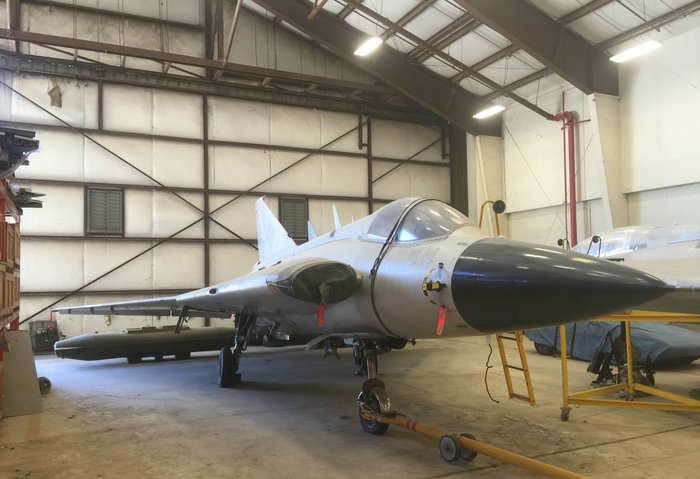
The Saab 35 Draken (Dragon) is one of the most visually striking and aerodynamically innovative fighter aircraft of the Cold War era, a Swedish masterpiece that demonstrated small nations could design and manufacture world-class combat aircraft entirely independent of the superpowers. Developed by Saab AB during the late 1940s and early 1950s under conditions of strict secrecy, the Draken introduced the revolutionary double-delta wing configuration to operational military aviation — a design so unconventional that many experts doubted it would work, yet one that ultimately delivered outstanding performance and handling characteristics that vindicated Swedish aeronautical engineering. Today, retired Draken airframes represent some of the most sought-after jet warbirds available, combining dramatic visual presence with genuine supersonic-era performance heritage and the mystique of a Cold War frontline fighter that never fired a shot in anger.
Sweden's strategic position during the Cold War was uniquely challenging: officially neutral yet acutely aware of its vulnerability to Soviet air power, the Swedish Air Force (Flygvapnet) required a high-performance interceptor capable of defending Swedish airspace without access to American or NATO technology. This requirement drove Saab to develop entirely indigenous solutions, including the extraordinary double-delta wing that defines the Draken's silhouette.
The double-delta concept emerged from Saab's research into the aerodynamics of high-speed flight. A conventional delta wing offered good supersonic performance but poor subsonic handling. Saab's engineers, led by Erik Bratt, proposed a compound delta in which an inner section at a steeper leading-edge sweep blended into an outer section at a shallower angle — effectively creating two delta wing sections in one continuous surface. This arrangement provided the high-speed advantages of a conventional delta while dramatically improving low-speed lift characteristics and reducing the high approach speeds that plagued conventional delta fighters.
The prototype Draken, designated Saab 210, was a 70% scale proof-of-concept aircraft that flew in January 1952. It validated the double-delta configuration so convincingly that the full-scale Draken prototype (35-1) flew just three years later in October 1955. The aircraft entered service with the Flygvapnet in 1960 and remained in frontline Swedish service until 1999 — an operational longevity of nearly four decades that speaks to the fundamental soundness of the original design.
The Draken's performance varied across its many variants, with later versions incorporating more powerful Volvo Flygmotor RM6 engines (license-built Rolls-Royce Avons with Swedish afterburners) and increasingly sophisticated avionics. Representative figures for the J 35F, the most capable production variant, include:
The double-delta wing gives the Draken its unmistakable appearance and confers several important practical advantages over conventional layouts. The very large wing area relative to aircraft weight results in a low wing loading that, combined with the aerodynamic characteristics of the compound delta, provides excellent maneuverability at combat altitudes. The blended fuselage-wing cross-section creates substantial internal volume for fuel and systems without a separate distinct fuselage area that would add parasitic drag.
The Draken's one significant handling characteristic that pilots must master is its tendency toward a phenomenon called "super stall" or deep stall in certain flight conditions — a consequence of the delta configuration in which the aircraft can settle into a stable but unrecoverable high angle of attack with the main wing blanking the tail surfaces. Swedish Air Force training addressed this thoroughly, and the accident rate attributable to this characteristic was managed successfully throughout the type's operational career. Operators of civilian Draken aircraft today receive type-specific training that covers this aspect of the flight envelope in detail.
The Draken's export success demonstrated Swedish aviation's credibility on the international market. Denmark became the first export customer, operating F-35 Drakens from 1970 alongside TF-35 trainers and RF-35 reconnaissance variants. Danish Drakens were configured to carry the Bullpup air-to-ground missile and modified to meet NATO interoperability standards.
Finland operated the Draken from 1974, flying J 35BS and J 35FS variants acquired from Swedish surplus stocks alongside new-build J 35XS aircraft. Finnish Drakens remained in active service until 2000, and Finland's experience operating the type provided valuable data on long-term airframe management and engine maintenance in Northern European conditions.
Austria acquired 24 J 35Ö Drakens from Swedish surplus stocks in the 1980s, creating a unique situation in which a NATO-adjacent neutral country operated a nominally neutral Swedish aircraft in the air defense role. Austrian Drakens served until 2005, making Austria one of the last Draken operators worldwide and generating significant interest in the airframes upon retirement.
Following retirement from military service, a number of Draken airframes entered the civilian warbird market, primarily in the United States where they were acquired under demilitarization agreements that required removal of weapons systems and sensitive avionics. American civilian Drakens operate under Experimental category certification and have demonstrated strong demand at airshows due to their dramatic appearance and impressive low-level performance.
Maintenance of civilian Draken aircraft centers on the Volvo Flygmotor RM6 (Rolls-Royce Avon) engine, which is well-supported through the global community of Avon operators including operators of other Avon-powered aircraft such as the English Electric Lightning and various de Havilland types. Airframe support requires engagement with Saab's heritage support network and specialized warbird restoration firms with Draken experience.
Airplane Trade lists Saab 35 Draken aircraft for sale including airworthy examples, restoration projects, and static display airframes. The Draken's combination of Cold War history, Mach 2 performance heritage, and unique double-delta aesthetics makes it one of the most desirable jet warbirds available. Browse current listings or register alerts for new Draken opportunities in this category.