

Popular
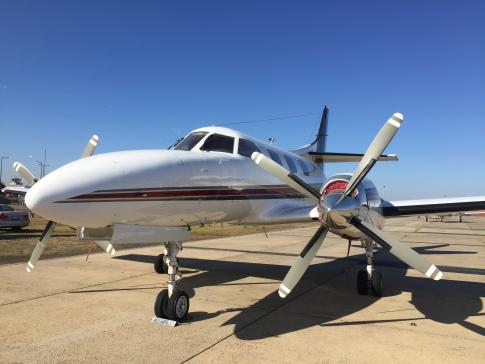
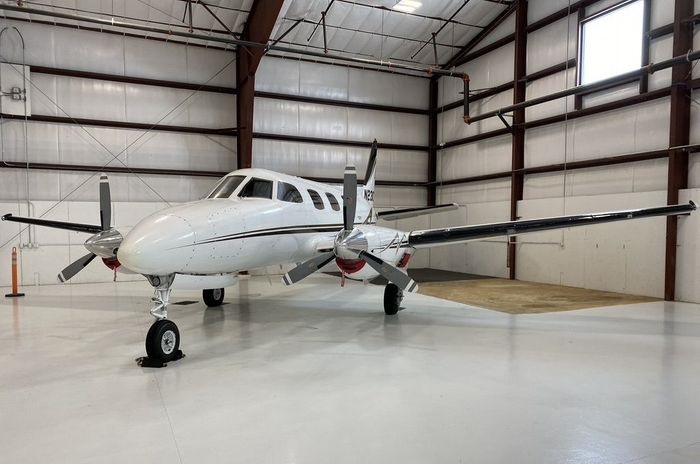
1982 Fairchild Swearingen Merlin III-C
- January 31, 2023


The Swearingen Merlin series represents one of the most successful lineages of pressurized twin-turboprop business aircraft ever produced in the United States. Designed and originally built by Ed Swearingen and later continued under Fairchild, the Merlin family earned a reputation for outstanding performance, cabin comfort, and operational economy that has kept these aircraft flying for decades after production ended. Whether you are searching for a Swearingen Merlin IIB, a Merlin III, or the stretched Merlin IVC, the Airplane Trade marketplace connects buyers with carefully maintained examples from operators around the world.
Ed Swearingen launched the Merlin program in the mid-1960s as a high-performance turboprop alternative to piston twins that dominated the corporate market. The initial Merlin IIB, certificated in 1966, used Garrett AiResearch TPE331 engines mounted on a modified Beechcraft Queen Air airframe with a new pressurized fuselage. It immediately set a standard for speed and comfort that few competitors could match. The subsequent Merlin III introduced a fully new Swearingen-designed fuselage with a stand-up club cabin and grew into one of the most popular turboprop twins in the eight-to-ten-seat class. Fairchild acquired the line in 1971 and continued development through the Merlin IVC and militarily designated Metro commuter derivatives, greatly expanding the fuselage and seating capacity while retaining the aerodynamic refinement that defined the original design.
The founding variant of the series combined Garrett TPE331-1-151G engines of approximately 665 shp each with a pressurized cabin seating six to eight passengers. Its high cruise speed — routinely exceeding 280 knots true airspeed — stunned operators accustomed to piston twins and established Swearingen as a serious aircraft manufacturer. The IIB airframe remains robust and parts availability has remained reasonable thanks to the common Garrett engine platform shared across thousands of aircraft.
Introduced in 1970, the Merlin III featured an all-new, longer fuselage designed entirely by Swearingen that offered genuine stand-up headroom and a true club seating arrangement for eight passengers. Powered by upgraded TPE331-3 engines producing around 840 shp each, the Merlin III cruised at up to 300 knots and climbed to flight levels quickly enough to avoid most weather encountered in typical business operations. It became the backbone of the Swearingen commercial line and is the variant most frequently encountered on the used aircraft market today.
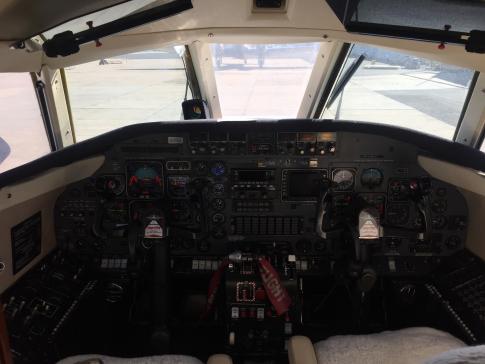
Successive refinements to the Merlin III introduced Collins Pro Line avionics, improved pressurization controllers, and aerodynamic tweaks that reduced drag and increased range. The IIIC in particular gained enhanced fuel capacity and uprated engines, extending useful range beyond 1,400 nautical miles at high-speed cruise settings. These improvements kept the Merlin III competitive well into the 1980s against newer designs with modern glass cockpits.
The Merlin IVC, developed under Fairchild ownership, stretched the fuselage significantly to accommodate up to thirteen passengers in an airliner-style arrangement. Powered by Garrett TPE331-10 engines of 1,000 shp each, the Merlin IV targeted small regional operators, air taxi companies, and cargo carriers that needed turboprop reliability with more payload than eight-seat business turboprops could offer. The militarily designated C-26 and Metro family evolved directly from this platform.
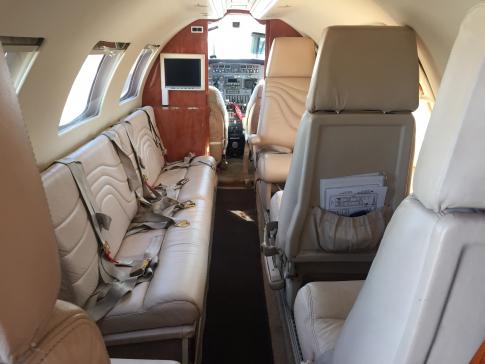
What set the Merlin apart from its contemporaries was genuine cabin quality. The pressurized fuselage maintained a comfortable cabin altitude even at its service ceiling, and the stand-up headroom in the Merlin III and IV made boarding and moving through the cabin far more comfortable than in cramped turboprop competitors. Typical interiors feature four-place club seating at the forward end with two additional seats aft, high-quality soundproofing that reduces engine noise to acceptable levels, and full environmental control including cabin heat, air conditioning, and fresh-air ventilation.
The Merlin series occupies an attractive economic position in the turboprop market. Fuel burns for the Merlin III typically range between 55 and 70 gallons per hour total depending on altitude and power setting, translating to operating costs that are substantially lower than light jets while delivering comparable or superior range and speed on many routes. The TPE331 engine family benefits from an enormous global service network with competitive overhaul pricing, and the robust Swearingen airframe has proven extremely durable in commercial and corporate service alike.
Annual inspection costs vary with aircraft condition and installed equipment, but well-maintained Merlins typically fall in a range that makes them accessible to owner-pilots, small charter operations, and corporate flight departments that need serious capability at a sustainable budget. Hot-section inspection intervals for the TPE331-3 are typically at 1,750 hours and full overhaul at 3,500 hours, both of which are well-understood costs in the pre-purchase planning process.
Prospective buyers should prioritize engine times relative to hot-section and TBO limits, as the TPE331 family is reliable but expensive to overhaul. Request complete engine logbooks and verify that all AD compliance is current, particularly Airworthiness Directives relating to propeller systems, engine mounts, and pressurization components that have accumulated over the fleet's operational life. Inspect the pressurization seals and window reveals carefully — leaks are common in older airframes and can represent significant repair costs. Review avionics for compliance with current ADS-B Out requirements and confirm that any supplemental type certificate equipment is properly documented.
Airframe total time and the aircraft's operational history — corporate versus charter versus cargo — significantly influence structural condition. Aircraft that have operated in cargo roles may have additional inspection requirements and potentially higher wear on cabin floors and cargo restraint systems. A pre-purchase inspection by an IA familiar with the Swearingen Merlin family is strongly recommended before committing to any purchase.
Airplane Trade features Swearingen Merlin aircraft for sale from private sellers, fleet operators, and professional aircraft dealers across North America, Europe, and beyond. Each listing includes detailed specifications, photographs, and seller contact information so you can evaluate aircraft efficiently and connect directly with owners. Whether you are looking for a low-time Merlin III to upgrade your personal travel or a Merlin IVC to launch a turboprop charter operation, our marketplace has the inventory and the tools to help you find the right aircraft at the right price.
List your Merlin for sale today and reach the largest audience of qualified turboprop buyers actively searching the Airplane Trade platform. Our category pages are optimized for buyers at every stage of the purchase process, from first research through final offer.