

Boeing CEO: No Clean-sheet Aircraft This Decade
Boeing CEO Dave Calhoun confirmed in mid-2022 that the company would not launch a clean-sheet commercial aircraft program during the current decade — a statement that, while not entirely surprising given Boeing’s financial position and operational challenges, carried significant implications for the competitive dynamics of the commercial aviation market through the 2030s and beyond. The declaration effectively ceded the new aircraft development timeline to Airbus, which was already advancing its A320neo family successor studies and its A220 expansion plans.
Calhoun’s statement came against the backdrop of Boeing’s most difficult period in decades. The 737 MAX was still working to fully restore customer confidence following its 2019 re-certification after the two fatal crashes. The 787 Dreamliner program had suffered a multi-year delivery halt due to manufacturing quality issues that required extensive FAA scrutiny and aircraft rework. The 777X — Boeing’s largest commercial aircraft — had been delayed repeatedly and was not yet certified. In this environment, the financial and organizational bandwidth required to launch a major new aircraft program simply did not exist.
What the Future Holds for Boeing After the CEO’s Decision to Not Develop a Clean-Sheet Aircraft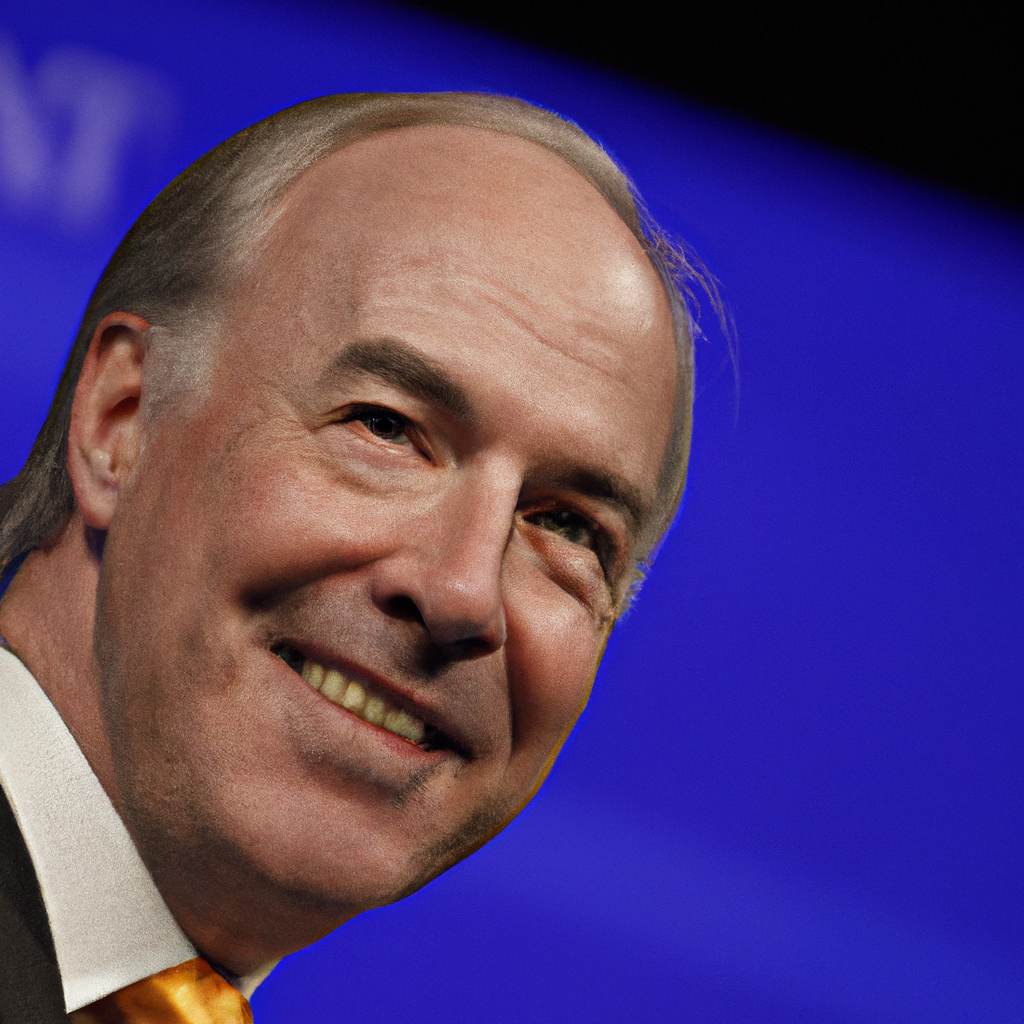
What “Clean Sheet” Means — and Why It Matters
A “clean-sheet” aircraft design starts from a blank page — new fuselage cross-section, new wing, new propulsion architecture, new systems — rather than evolving an existing platform. The 737 MAX is not a clean-sheet design; it is a modernized evolution of the 1960s 737 airframe, constrained by its original fuselage height and landing gear geometry. The 787 Dreamliner, the A350, and the A220 are clean-sheet designs that achieved step-change improvements in fuel efficiency, cabin environment, and operating economics precisely because they were not constrained by legacy architecture.
The single-aisle market — the 737/A320 segment — is where the clean-sheet question is most commercially consequential. Narrow-body aircraft account for roughly 75% of all commercial jet deliveries by number and a majority of airline revenue. A manufacturer that establishes a generational advantage in single-aisle economics — through better aerodynamics, more efficient engines, lighter structures, or reduced maintenance burden — can dominate the market for 20–30 years. The A320neo family’s success relative to the 737 MAX has given Airbus a meaningful market share advantage that Boeing desperately needs to address.
Boeing’s Strategic Options
With a clean-sheet 737 replacement ruled out for the 2020s, Boeing faces limited strategic options for the narrowbody segment. The company can continue to optimize the 737 MAX — the MAX 10, the largest variant, offers competitive seat-mile economics — and invest in incremental improvements. It can explore derivative designs that extract more performance from the existing architecture without the full cost of a new-type program. Or it can accept that Airbus will continue to gain share in the single-aisle segment and focus resources on widebody products where Boeing retains stronger competitive positions.
Industry analysts and Boeing’s airline customers have expressed consistent frustration with this situation. Airlines ordering narrowbodies for delivery in the late 2020s and 2030s have limited choices: the 737 MAX family, the A320neo family (including the A321XLR for longer thin routes), or the Embraer E2 for smaller capacity requirements. Many would prefer a third option — a genuinely next-generation Boeing narrowbody — that simply does not exist on the horizon.
Financial Constraints and the Cost of a New Program
Launching a major commercial aircraft program costs $15–25 billion or more in development investment, spread over 8–12 years from program launch to first delivery. Boeing’s financial position in 2022 — burdened by MAX grounding costs, 787 rework expenses, 777X delays, and defense program losses on fixed-price contracts — made that level of investment impossible without substantial external financing that would have further stressed the balance sheet.
The company’s free cash flow, which turned positive again in 2022 after two years of massive outflows, was being directed first toward debt reduction, then toward production rate increases on the MAX and 787 to generate revenue from the existing order backlog. New program investment, in this financial context, would have to wait until Boeing had rebuilt the financial cushion necessary to sustain a decade-long development program through inevitable delays and cost overruns.
Implications for the Competitive Landscape
Calhoun’s confirmation of the no-new-aircraft-this-decade position gave Airbus strategic clarity that the European manufacturer could exploit. Airbus accelerated its A320 family production rate increases, announced the A321XLR timeline confidently, and signaled development studies for what might eventually become an A320 replacement — an aircraft that could enter service in the late 2030s or early 2040s with a technology step that Boeing would need to match or surpass with its own new program.
For Boeing, the path back to competitive parity in the single-aisle market will almost certainly require a new aircraft program launched in the late 2020s, targeting entry into service in the mid-to-late 2030s. The technological bets that program makes — on propulsion (hydrogen? advanced turbofan? open rotor?), materials, systems architecture, and manufacturing technology — will define Boeing’s competitive position for the second half of the 21st century. Getting those bets right, after the difficulties of the MAX and 787 programs, represents the most important strategic and engineering challenge the company has faced in generations.
What Airlines and Industry Watchers Are Saying
The near-universal view among airline executives and industry analysts is that Boeing needs a new narrowbody to remain a credible long-term competitor in the commercial aviation market. The 737 MAX, whatever its merits as a modernized platform, carries reputational and architectural constraints that limit Boeing’s ability to win the segment convincingly. A clean-sheet Boeing narrowbody, if it delivers the step-change in economics that modern design tools and propulsion technology enable, would reshape the market immediately upon its announcement — orders would flow before a prototype had been built, as they did for both the 787 and the A350 when those programs were launched.
The decade without a new Boeing commercial aircraft program is not necessarily a permanent condition. It is a consequence of a specific set of financial and operational circumstances that Boeing is actively working to resolve. But the clock is running: every year without a new program launch is a year that Airbus extends its head start on whatever comes after the A320neo family. By Calhoun’s own acknowledgment, that head start will now extend into the 2030s at minimum.
