

Exploring Cessna Planes: A Guide for Aviation Lovers
Cessna is the most recognized name in general aviation. Since 1927, the company has produced more aircraft than any other manufacturer in history — and for good reason. Cessna planes are known for being forgiving to fly, relatively affordable to own, and genuinely useful across a wide range of missions. Whether you’re a student pilot logging your first hours in a 172, a working pilot hauling cargo in a Caravan, or a business traveler crossing the country in a Citation, there’s a Cessna built for the job.
This guide covers the most important Cessna models, their real-world strengths and limitations, and what to look for if you’re in the market to buy one.
A Brief History of Cessna Aircraft
Clyde Cessna founded the Cessna Aircraft Company in Wichita, Kansas in 1927. Wichita would go on to become the “Air Capital of the World,” and Cessna would play a central role in that story. The company survived the Great Depression, pivoted to military production during World War II (building over 5,000 Bobcat trainers for the Army Air Forces), and emerged into the postwar boom as one of America’s premier light aircraft manufacturers.
The 1950s and 1960s were Cessna’s golden era. The Model 172 Skyhawk debuted in 1956 and never stopped selling. The 150 made flight training accessible to the middle class. The 310 twin gave small businesses a capable tool for executive travel. By the late 1970s, Cessna was delivering over 8,000 new aircraft per year — a production pace the industry has never come close to matching since.
The 1994 General Aviation Revitalization Act (GARA) helped restart piston production after a decade-long freeze caused by liability concerns, and Cessna resumed delivering new 172s and 182s in 1997. Today, Cessna operates as part of Textron Aviation alongside Beechcraft and Hawker, continuing to produce the 172, 182, 206, Caravan, and the Citation family of business jets.
The Core Cessna Lineup: Models Every Pilot Should Know
Cessna 172 Skyhawk — The World’s Most Popular Aircraft
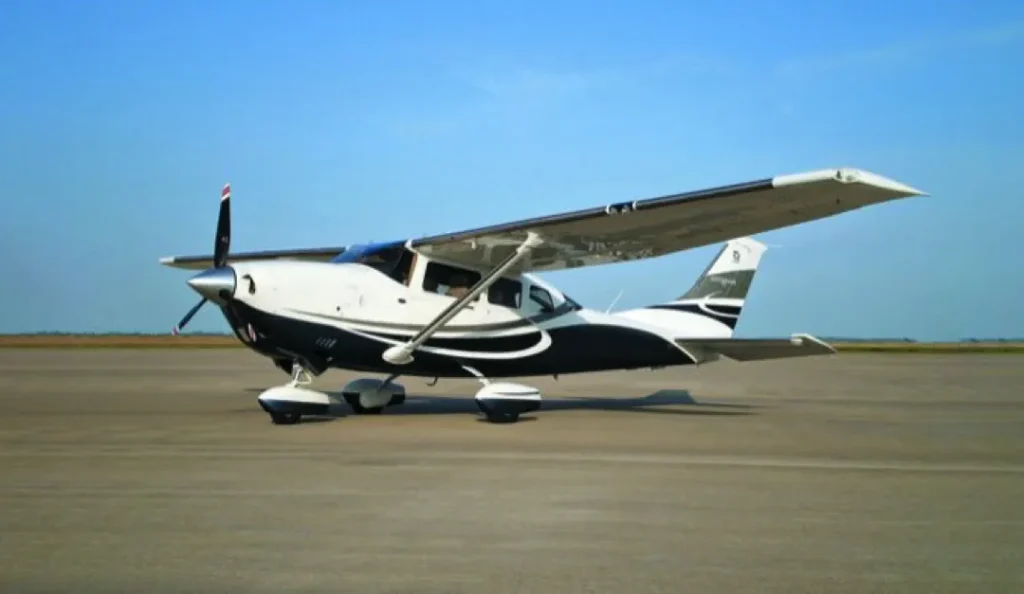
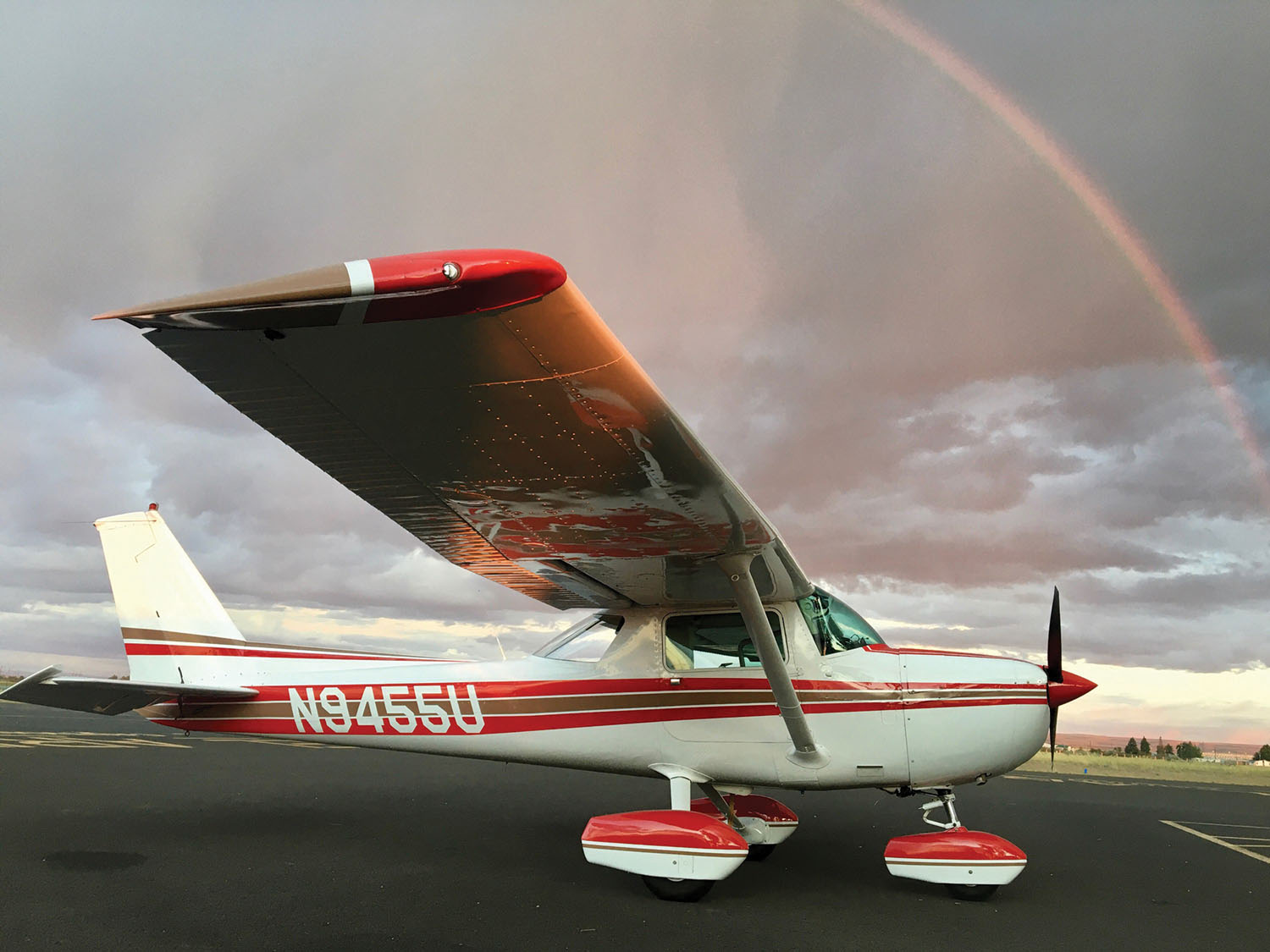
More Cessna 172s have been built than any other aircraft in history — over 44,000 since 1956, and production continues today. The Skyhawk is the aircraft that taught the world to fly. Walk into almost any flight school in the United States, and you’ll find a fleet of 172s on the ramp.
The 172’s appeal is simple: it’s stable, honest, and nearly impossible to get into trouble in. The high-wing configuration gives excellent downward visibility and makes loading easy. The wide cabin comfortably fits four people. Fixed tricycle landing gear means no gear-up risk and lower maintenance costs. A well-maintained 1970s model can be found for $45,000–$70,000; glass-panel 2000s models run $80,000–$120,000.
Cessna 182 Skylane — The Step-Up Single
The 182 is what pilots graduate to when they’ve outgrown the 172. It offers meaningfully more payload, more speed, and more climb performance. With a 230 hp engine and 88 gallons of fuel, a 182 can carry two adults with full baggage on a 5–6 hour flight. The turbocharged T182 extends useful ceiling above 20,000 feet — a serious cross-country machine. Solid mid-1970s examples run $60,000–$90,000; glass-panel 2000s models fetch $150,000–$220,000.
Cessna 206 Stationair — Six Seats, Go Anywhere
The 206 is Cessna’s premier utility piston aircraft. Six seats, a wide cargo door, and a 300 hp engine make it the choice of backcountry operators, charter companies, and bush pilots across Alaska, Canada, and Africa. On floats, it becomes one of the most capable seaplanes available. Used 206s range from $90,000 for older examples to $400,000+ for recent low-time turbocharged variants.
Cessna 210 Centurion — Speed and Range
The 210 Centurion is Cessna’s high-performance retractable-gear six-seater. Top cruise speeds of 175–185 knots put it in the territory of much more expensive aircraft. Produced from 1960 to 1986, its combination of speed, range, and payload still makes it competitive with modern designs. A pre-purchase inspection by a 210-specialist mechanic is essential — the complex fuel system and gear system demand careful attention.
Cessna Caravan — The Turboprop Utility Icon
The 208 Caravan, introduced in 1984, is one of the most successful turboprop designs in history with over 2,500 delivered worldwide. It’s the aircraft of choice for FedEx feeder operations, island-hopping airlines, and backcountry charters from Alaska to the Amazon. Powered by a Pratt & Whitney Canada PT6A, the Grand Caravan EX seats up to 14 passengers or carries nearly 3,000 lbs of cargo. Caravans range from $500,000 for older examples to $2.5M+ for new production.
Cessna Citation Series — Business Jets for Every Mission
The Citation line spans from light jets to large-cabin long-range aircraft. The original Citation I (1971) pioneered the pilot-friendly business jet concept — accessible to owner-operators, without the demanding handling characteristics of swept-wing jets. Today’s lineup includes the entry-level M2 Gen2 (1,550 nm range, seats 7), the best-selling XLS Gen2 midsize, and the super-midsize Longitude (3,500 nm, Mach 0.84). The used Citation market is very active, particularly for early CJ and Citation V/Ultra series.
What to Look for When Buying a Cessna
Cessna’s reputation for quality is well earned, but no used aircraft buys itself. Pay attention to these factors before committing:
- Logbooks: Complete airframe and engine logs are non-negotiable. Missing logs destroy resale value and create financing and insurance problems.
- Engine time: Time Since New (TSN) and Time Since Overhaul (SMOH) relative to TBO matter enormously. An engine at or past TBO isn’t a dealbreaker, but the price must reflect it.
- Airworthiness Directives: Verify all ADs are current. Turbine aircraft accumulate significant AD stacks over time.
- Corrosion: Particularly critical for aircraft based in coastal or humid environments. Inspect wing attach points, control cables, and battery trays carefully.
- Avionics: ADS-B Out compliance is required in most US airspace. WAAS GPS and a working autopilot add significant value.
- Pre-purchase inspection: Always. Have a type-knowledgeable A&P/IA inspect the aircraft independently before closing. Typical cost: $500–$2,500 depending on complexity.
Browse Cessna Aircraft for Sale on Airplane Trade
Whether you’re looking for your first trainer, a family cross-country machine, a capable utility hauler, or an entry into turbine aviation, there’s a Cessna designed for it. Airplane Trade lists Cessna aircraft across all categories — from affordable 172s to low-time Caravans and Citations. Browse current listings, compare specs and prices, and connect directly with sellers.
