
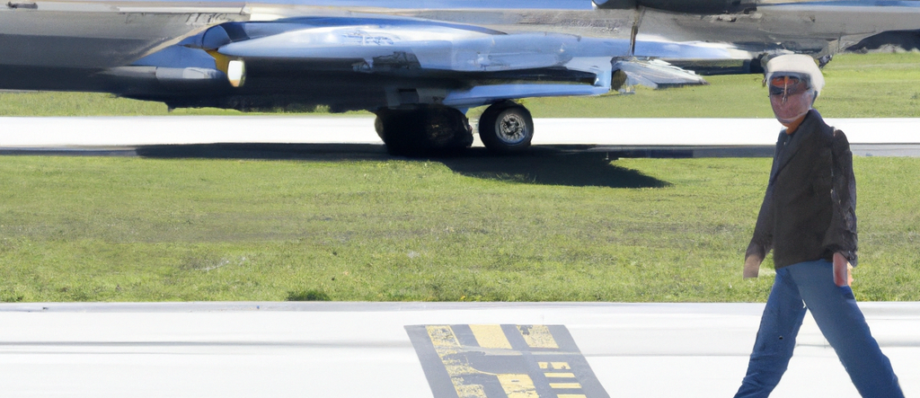
FAA Opts Out of Punishment for Harrison Ford Taxiway Landing
In February 2017, actor and private pilot Harrison Ford landed his Aviat Husky on a taxiway at John Wayne Airport (KSNA) in Orange County, California — passing directly over a Boeing 737 holding at the runway threshold in the process. Ford, who holds a commercial pilot certificate with multiple ratings, transmitted “Was that airliner meant to be underneath me?” over the radio after realizing what had happened. The American Airlines 737 had 116 passengers aboard.
The FAA investigated the incident and ultimately chose not to pursue enforcement action against Ford. The decision drew criticism from some quarters — the agency had previously taken action against Ford in 2015 when he landed his Ryan PT-22 Recruit on a taxiway at Hawthorne Municipal Airport (KHHR) — but the FAA’s approach reflected its standard policy framework for handling pilot deviations, which prioritizes remediation over punishment in most non-egregious cases.
The Implications of the FAA’s Decision to Forgo Punishment for Harrison Ford’s Taxiway Landing
What Actually Happened at KSNA
According to FAA records and ATC communications from the incident, Ford was conducting a visual approach to John Wayne Airport and selected the taxiway — which runs parallel to Runway 20L — rather than the runway itself. The taxiway at KSNA is Taxiway B, which parallels the runway and is wide enough that a light aircraft pilot could plausibly mistake it for a runway in certain visual conditions, particularly if not fully oriented to the airport layout.
The critical safety element was Ford’s passage over the American Airlines 737, which was holding short of the runway awaiting takeoff clearance. The separation between Ford’s Husky and the commercial jet was described in FAA records as adequate but uncomfortably close. Air traffic controllers issued a traffic advisory and the AA737 crew reported the aircraft overhead. No collision occurred and no injuries were reported.
Ford acknowledged the error in communications with tower. Post-incident, he told the FAA that he had become confused about which surface was the runway — attributing the mistake to an error in spatial orientation during the approach. He expressed remorse and submitted to a voluntary flight review as part of the resolution process.
The FAA Enforcement Framework — Why No Certificate Action
The FAA’s approach to pilot deviations is governed by Order 2150.3, which establishes a tiered enforcement philosophy. For deviations that don’t involve criminal conduct, don’t reflect an unwillingness to comply, and where the pilot demonstrates understanding of the violation and takes corrective action, the FAA’s Compliance Program encourages resolution through counseling and training rather than certificate suspension or civil penalty.
The 2015 Hawthorne incident, for which Ford was issued a Letter of Investigation and counseled by the FAA, did not result in certificate action either. The 2017 KSNA taxiway landing followed a similar resolution path — the FAA determined that Ford’s deviation, while serious, did not meet the threshold for enforcement action under its compliance philosophy. Critics argued that the 2017 incident was more serious given the proximity to a commercial airliner, and that the FAA’s lenient approach reflected preferential treatment of a celebrity.
Celebrity Pilots and the Enforcement Spotlight
Harrison Ford has been an active private pilot since the 1990s and has experienced several notable aviation incidents. Beyond the two taxiway incidents, he made a forced landing on a golf course at Penmar Golf Course in Venice, California in March 2015 after the engine of his vintage Ryan PT-22 failed shortly after departure from Santa Monica Airport (KSMO). That incident — which caused Ford minor injuries — was attributed to carburetor ice and mechanical failure rather than pilot error.
Ford’s aviation incidents have drawn disproportionate media attention because of his fame, but the incidents themselves are not extraordinary by general aviation standards. Runway incursions, including inadvertent taxiway landings, occur at GA airports with some regularity — most of the pilots involved are not famous, and their cases are resolved through the same FAA compliance framework without public scrutiny. The Ford cases became policy discussions precisely because the media spotlight elevated them beyond what the underlying facts might otherwise warrant.
The Broader Taxiway Landing Risk
Taxiway landings are a recognized safety hazard at airports where taxiways run parallel to runways. The FAA has worked to reduce the risk through runway safety programs, enhanced lighting and signage standards (runway entrance lights, runway guard lights, and hold short markings), and pilot education. The problem is not limited to GA pilots — commercial airliners have landed on taxiways at major airports, including a notable incident at San Francisco International (KSFO) in 2017, also involving an Air Canada A320 that nearly overflew four aircraft waiting on the taxiway.
For individual pilots, the lessons are straightforward: thorough airport diagram review before arrival, positive identification of the landing surface before touchdown, and assertive use of ATC advisories when orientation is uncertain. At unfamiliar airports, particularly those with parallel taxiway-runway configurations, a go-around for reorientation costs only a few minutes of fuel — it does not cost a certificate, or worse.
