
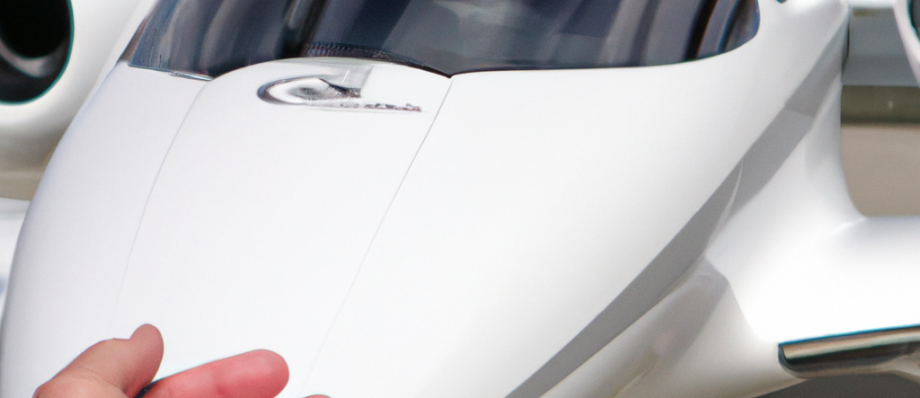
Hands On: Cirrus G2+ Vision Jet
The Cirrus Vision Jet SF50 is unlike any other aircraft in production. It’s a single-engine personal jet — a category that didn’t exist before Cirrus created it — designed to be flown by a single pilot with a type rating, carrying up to six passengers, at speeds and altitudes that would have been unimaginable in a piston single just a decade ago. The G2+ is the current production variant, featuring an upgraded Cirrus Airframe Parachute System (CAPS) rated for the aircraft’s expanded flight envelope, revised interior, and refinements drawn from thousands of hours of fleet experience since the original SF50’s 2016 certification.
Flying it is a genuinely novel experience — and not just because of the category. The Vision Jet’s V-tail, pod-mounted Williams FJ33-5A engine, and carbon fiber airframe give it a silhouette unlike anything at the ramp. Climbing in, the cockpit feels like a well-considered private space rather than a utilitarian flight deck. The Cirrus Perspective Touch+ avionics suite — a Garmin G3000 derivative with touchscreen controllers and a three-screen primary display — is among the most pilot-friendly glass panel installations available at any price point.
The Benefits of Hands On Flight Training with the Cirrus G2+ Vision Jet
Flying the Vision Jet: What the Numbers Mean in Practice
The SF50 G2+ is certificated to FL280 (28,000 feet), where it cruises at approximately 300 knots true airspeed on about 59 gallons per hour of Jet-A. Range with IFR reserves is approximately 1,000 nautical miles — enough to connect most city pairs within a single U.S. time zone, or cross a significant portion of Europe. These are numbers that a turboprop pilot would recognize; they are not transcontinental numbers, and buyers who need to routinely cover 1,500+ nm nonstop should be looking at a light twin-jet instead.
Takeoff and landing performance is where the Vision Jet earns particular respect. At sea level, it can depart in under 2,000 feet of runway and land in approximately 2,500 feet. This opens a significant range of smaller regional airports that midsize and larger jets cannot access — a meaningful operational advantage for owners who want to fly into destination airports rather than airline hubs. The combination of jet speed and piston-like field performance is one of the Vision Jet’s genuine competitive differentiators.
The Single-Engine Question
The most common objection to the Vision Jet is its single-engine configuration. Twin-engine jets provide redundancy — if one engine fails, the other keeps flying. The SF50’s FJ33-5A is its only powerplant, and an engine failure at altitude in IMC is a serious emergency by any standard. Cirrus’s answer to this objection is twofold: first, the Williams FJ33 family has an exceptional service reliability record, with in-flight shutdowns measured in the very low single digits per 100,000 flight hours; second, and more importantly, the Vision Jet is the only jet aircraft in the world equipped with a whole-airframe parachute system.
CAPS — the Cirrus Airframe Parachute System — is a ballistic parachute that deploys the entire aircraft under a canopy, enabling a controlled descent to the ground at approximately 1,700 feet per minute. It is not a panacea; CAPS deployment at very low altitude or very high speed may not be survivable. But it provides a layer of protection against loss-of-control accidents and unrecoverable situations that no other certified jet offers. Cirrus pilots have used CAPS successfully dozens of times on piston aircraft; the technology is proven, and its inclusion in the Vision Jet is genuinely meaningful.
Type Rating and Training
The Vision Jet requires a type rating (CE-LS, the Cessna Light Sport type designation used for the SF50 under FAA rules). Initial type rating training is conducted at Cirrus’s training center in Knoxville, Tennessee, and takes approximately two weeks for pilots with a current instrument rating and sufficient jet or complex single experience. The training program is well-regarded — Cirrus has put significant resources into building a standardized curriculum that produces consistently competent SF50 pilots rather than minimally qualified certificate holders.
Ongoing proficiency is critical. The Vision Jet is not a forgiving aircraft in the way that a Cirrus SR22 is forgiving — it climbs fast, descends fast, and requires precise energy management on approach. Pilots transitioning from piston singles need to internalize jet-speed thinking before they are comfortable in the SF50. Cirrus strongly recommends recurrent training every six months, and the SF50 owner community has developed a culture of active participation in factory training events.
The Market and Ownership Economics
New Vision Jet G2+ aircraft list for approximately $2.8–3.0 million, depending on options. A well-equipped G2+ with popular options (enhanced autopilot, enhanced vision system, custom interior) can approach $3.2 million. Used SF50s — primarily G1 and G2 variants — trade in the $1.8–2.5 million range depending on time, avionics, and condition. Direct operating costs run approximately $800–1,000 per flight hour including fuel, maintenance reserves, and insurance for a typical owner-pilot operation.
For the owner who values the combination of personal jet performance, single-pilot simplicity, CAPS safety, and access to smaller airports, the Vision Jet occupies a unique position in the market. No other aircraft offers this specific combination. Whether that combination justifies the acquisition and operating cost is a personal calculation — but for a growing community of owners who have made exactly that calculation, the answer has clearly been yes.
